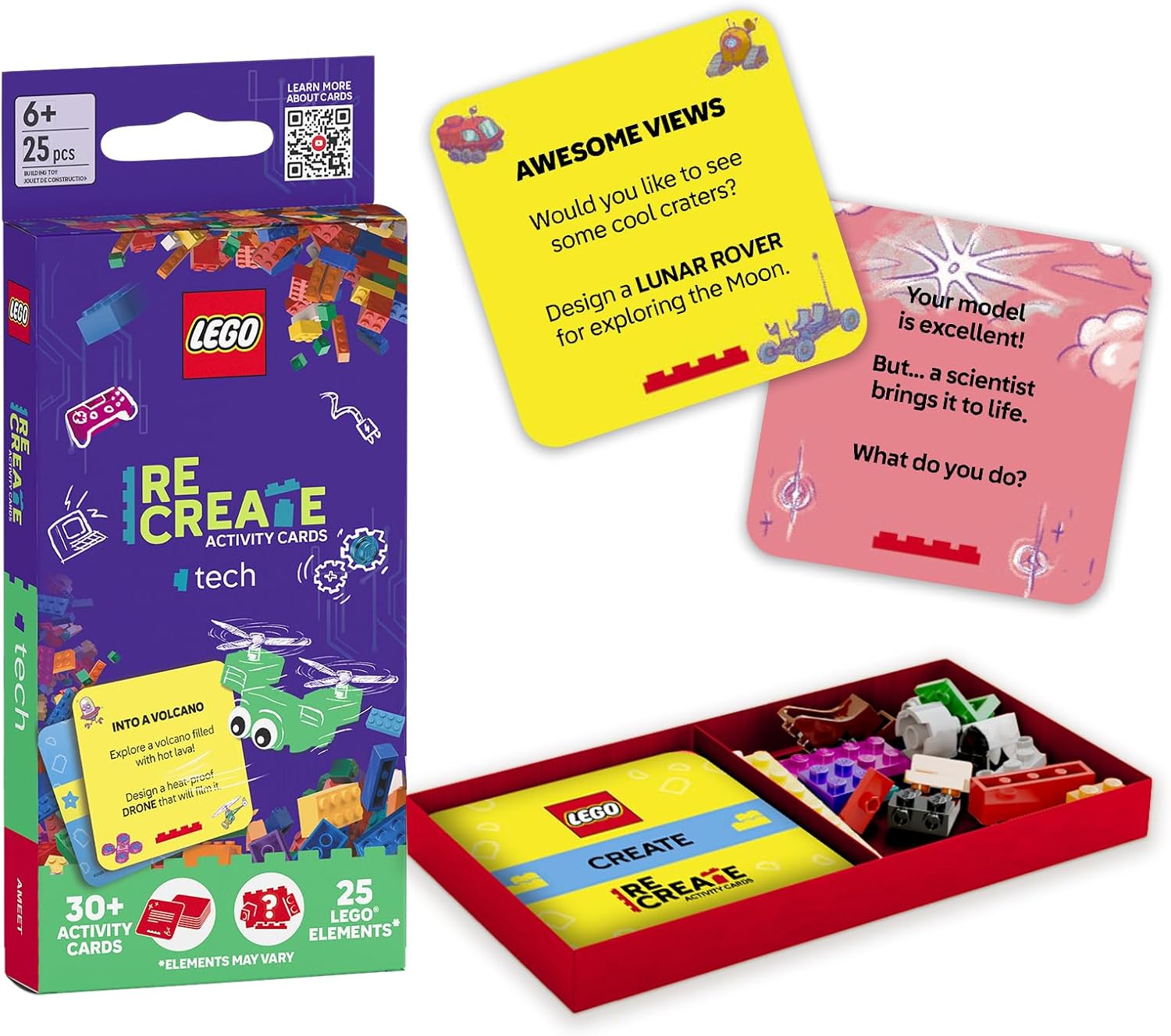
The digital age has brought about a surge of technological innovations that shape our daily lives. While the complexities of tech development can seem daunting, there exists a playful yet potent tool that can aid in understanding and even recreating these innovations: LEGO. Known for its vibrant bricks and endless possibilities, LEGO serves as a bridge between abstract concepts and tangible models. This article delves into how LEGO can be utilized to recreate technological advancements, fostering creativity and understanding.
The Intersection of Play and Technology
LEGO is not just a child’s toy; it’s a powerful medium for learning and innovation. By manipulating these simple blocks, individuals can simulate complex systems, enhancing their understanding of how technology functions.
- LEGO’s versatility allows for the construction of various models, mimicking real-world tech structures.
- It encourages a hands-on approach to learning, crucial for grasping abstract tech concepts.
- LEGO models can be used to demonstrate principles of engineering, coding, and design.
Recreating Tech Innovations with LEGO
Understanding Complex Systems
LEGO is a fantastic tool for demystifying complex technological systems. By breaking down technology into its fundamental components, LEGO allows for an exploration of how these parts interact and function together. This approach aligns with the concept of LEGO Recreate Tech, where intricate tech ecosystems are represented through the simplicity of LEGO bricks.
Encouraging Problem-Solving and Innovation
Building with LEGO not only facilitates understanding but also encourages problem-solving and innovation. When tasked with recreating a tech innovation, LEGO builders must:
- Identify the core components of the technology.
- Determine how these components interact.
- Innovate new ways to represent these interactions using LEGO.
This process mirrors real-world tech development, where engineers and designers iterate on ideas to improve functionality and usability.
Real-World Applications and Benefits
The use of LEGO in tech recreation is not just theoretical; it has practical applications that benefit various sectors.
Education
In educational settings, LEGO serves as a dynamic teaching tool. It helps students visualize and interact with challenging concepts, such as circuitry and mechanical design. This hands-on learning approach is particularly effective in STEM fields, where understanding the mechanics of technology is crucial.
Corporate Innovation
Corporations are also leveraging LEGO to foster innovation and creativity among employees. Workshops focused on building tech systems with LEGO can stimulate creative thinking and collaborative problem-solving, essential skills in today”?s fast-paced tech industry.
Conclusion
The ability to recreate and understand technology through LEGO is a testament to the power of creativity and play. By bridging the gap between abstract concepts and tangible models, LEGO empowers individuals to engage with technology in a meaningful way. Whether in educational environments or corporate settings, the potential of LEGO to innovate and inspire is boundless. For those interested in exploring this further, resources and kits on LEGO Recreate Tech provide a great starting point for unlocking creativity and understanding modern technology.
About the Author



