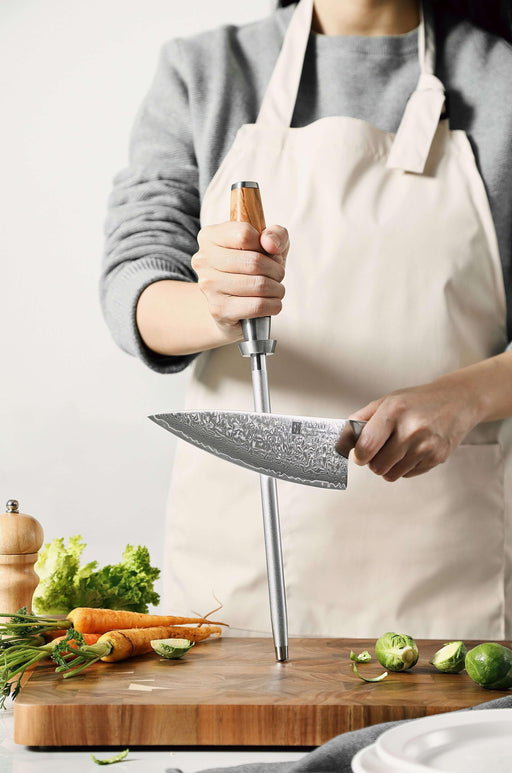
Choosing the right knife honing rod is essential for maintaining the sharpness and longevity of your kitchen knives. While a honing rod doesn’t technically sharpen the blade, it realigns the knife?s edge, keeping it in optimal condition for precise cutting tasks. With numerous options available, selecting the perfect honing rod can be overwhelming. Understanding the materials, sizes, and uses can guide you in making an informed decision that enhances your culinary experiences.
Understanding the Materials
Honing rods come in various materials, each offering unique benefits depending on the type of knives you own and the frequency of use. Here are the most common materials:
- Steel: Traditional and durable, steel honing rods are ideal for everyday use. They are suitable for most knife types, providing consistent results.
- Ceramic: Ceramic honing rods are harder than steel, offering a finer edge alignment. They are perfect for high-quality, delicate knife edges.
- Diamond-Coated: These rods are embedded with diamond particles, making them the most abrasive option. They can sharpen and hone simultaneously, ideal for dull or damaged blades.
To explore advanced guides and tips on selecting the right material, click here.
Size and Shape Considerations
The size and shape of the honing rod should complement your kitchen knives. A few points to consider include:
- Length: A honing rod should be longer than the blade of your largest knife. Typically, a rod of 10 to 12 inches is suitable for most home kitchens.
- Shape: While round rods are standard, oval or flat rods offer a larger surface area, making them more effective for honing.
Find out more about this approach to choosing the right size and shape by visiting The Bamboo Guy.
Honing Techniques for Maximum Efficiency
Proper honing technique is crucial for maintaining knife effectiveness. Here are some key steps:
- Angle: Maintain a consistent angle of 15 to 20 degrees as you slide the knife along the rod.
- Pressure: Use gentle pressure to avoid damaging the knife’s edge.
- Frequency: Hone regularly, ideally before each use, to keep blades sharp.
To discover expert strategies for honing techniques, see more information here.
Maintaining Your Honing Rod
Keeping your honing rod clean and well-maintained ensures its longevity and effectiveness:
- Cleaning: Wipe the rod with a damp cloth after each use to remove metal particles and residue.
- Storage: Store in a dry place to prevent rust or damage.
Learn about our tailored solutions for maintaining kitchen tools by visiting this link.
Conclusion
Selecting the best knife honing rod involves understanding the materials, choosing the correct size, applying proper honing techniques, and maintaining the tool effectively. By making an informed decision, any home cook or professional chef can ensure their knives remain in peak condition, enhancing both safety and precision in the kitchen. Whether you’re new to honing or looking to upgrade your current tool, consider the elements discussed to find a honing rod that perfectly suits your needs. Explore more about honing rods and their benefits here.
About the Author


